|
|||
|
Home
National
|
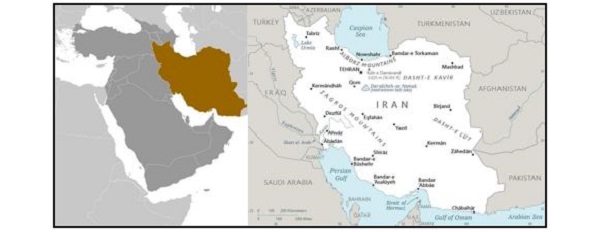
Operation Epic Fury TimelineHome > Events > OEF > Timeline Operation Epic Fury began on Saturday, February 28, 2026, with a U.S.-Israel joint multi-domain offensive against Iran to destroy its missile, drone, and nuclear infrastructure. The mission saw rapid success in establishing air superiority, aimed to permanently cripple Iran's defense industry and naval capability.
"Strategy without tactics
is the slowest route to victory. March 28, 2026 The U.S. has still not been able to address the opening of the Strait of Hormuz. The threat from small, inexpensive, and numerous one-way aerial and sea drones is hard to defeat. Iran has the ability to mine the strait with thousands of sea mines; while the U.S. has a mine clearance capability, it is not robust and it would take a significant amount of time and resources to clear the strait of mines. (National Interest, 26 Mar 2026) Update on Iran War by SOF News ***** March 27, 2026 Negotiations. Islamabad is performing the role of intermediary between Tehran and Washington. The elimination of Iran's top leadership has sidelined political leadership in favor of the Islamic Revolutionary Guard Corps (IRGC). Tomahawk Missile Expenditure. More than 850 of the expensive missiles (The Washington Post, 27 Mar 2026) have been fired onto Iranian targets in the past 30 days. There are concerns about the nation's limited supply of the Tomahawk Land Attack Missile (TLAM). The precision missiles can be fired from Navy surface warships and submarines and were first used in combat in 1991 during the Persian Gulf War. Only a few hundred of the missiles are manufactured each year. There were probably about 3,000 to 4,500 Tomahawks prior to the start of the 2026 Iran War. ***** March 26, 2026 Negotiations. Press Secretary Karoline Leavitt says that the U.S. and Iran are still engaged in peace talks. Iran says that the U.S. is "negotiating with itself." President Trump says that if Tehran does not accept a deal to end the war that he will "unleash hell." Strikes Suspended on Energy Infrastructure. President Trump extended the pause on U.S. missile and aircraft strikes against Iranian energy infrastructure for ten more days. Trump indicated that Iran asked for the extension.The pause is extended out to Monday, April 6, 2026. Iranian Regime Resiliency. The appointments of several Iran-Iraq war-era IRGC leaders to high-profile positions demonstrate that the killing of Ali Khamene'i has fueled a tilt toward hardline figures. They will likely insist on major U.S. concessions for ending the war. "Iran's Power Structure Adapts to War", Intelbrief, The Soufan Center, March 26, 2026. Not a "War". President Trump is not using the word "War" when talking about the Iran War. He is concerned that Congress has not authorized a war. His preference to describe the conflict is "military operation". The 1970s-era War Powers Act generally restricts the use of military force to 60 days unless Congress authorizes more time. The last formally declared war was during World War II. Congress has used an "Authorization for Use of Military Force" (AUMF) to authorize military actions in 1991, 2001, and 2002. Tolls for the Strait. Iran is preparing a law to charge tolls for ships passing through the Strait of Hormuz. It may be difficult for the U.S. military to provide security for commercial vessels passing through the strait. The Russia-Ukraine War provides an example of how hard it is to defend shipping in an age of aerial and naval drones. Ukraine, with no navy, has been able to keep the Russian Black Sea Fleet from operating in much of the Black Sea for the past four years. CENTCOM Update. Admiral Brad Cooper, commander of U.S. Central Command, stated on Wednesday, March 25, that the military operation in Iran remains "on plan or ahead of plan". He said the U.S. has struck more than 10,000 military targets and destroyed "92% of the Iranian Navy's largest vessels." Over two-thirds of Iran's drone, missile, and naval production shipyards and facilities have been destroyed. A CENTCOM spokesman said that nearly 300 U.S. service members have been wounded since the beginning of the Iran War. Many of them have been returned to duty. Lebanon. The Israeli ground offensive into southern Lebanon and bombing as far north as Beirut is continuing. The Lebanon government is hoping to open peace talks but Israel and Hezbollah have no interest at this time. Hezbollah stated that it launched 80 attacks on Israel on Wednesday, March 25th. Economic Impact. The four-week long war has put the global economy into a state of anxiety. Gas and oil prices are going higher and the financial markets are taking a hit. On Thursday, US stocks had the biggest loss since the war with Iran started, S&P dropping 1.7%. This was the fifth straight losing week, which would be the longest such losing streak in almost four years. Diverting Ukraine Aid for Iran War. The U.S. may be dipping into weapons and critical munitions destined for Ukraine to replenish weapons stocks for the Middle East conflict. The diversions would include air defense interceptor missiles and other high end air defense systems. The Prioritized Ukraine Requirements List (PURL) initiative has ensured a flow of select military equipment to Kyiv. U.S. Options Limited. The deaths of top Iranian leaders did not lead to the collapse of the Islamic Republic. The regime has demonstrated that they will suffer tremendous losses before capitulation. Stopping Iran from attacking shipping in the Strait of Hormuz and other Gulf nations will be extremely difficult in this era of aerial and naval drones. Trump has had difficulty in defining the wars objectives and what victory looks like; he needs an off-ramp and can't seem to find it. Read more in "America Has No Good Options in Iran", by Ilan Goldenberg, Foreign Affairs, March 23, 2026. Success? From an operational perspective, the Iran War has been a resounding success; from a strategic perspective, it may very well end up with a different storyline. ***** March 25, 2026 Iranian Kurds. In the early days of the Iran War, the Trump administration looked at encouraging the Iranian Kurdish groups to cross from their sanctuaries in Iraq into Iran to take part in regime change. Since then, the administration has backed off on the objective of regime change and working with the Iranian Kurds. Read more in "The Promise and Pitfalls of Arming the Kurds", War on the Rocks, March 25, 2026. U.S. Ceasefire Proposal. Iran has dismissed an initial 15-point ceasefire proposal from the United States, according to the state-run Fars news agency. The proposal had been received on Wednesday, March 25, 2026. Elements of the ceasefire proposal included sanctions relief, civilian nuclear cooperation, missile limits, rollback of Iran's nuclear program, monitoring by the International Atomic Energy Agency (IAEA), restrictions on Iran's support for armed groups, and the opening of shipping access through the Strait of Hormuz. Iranian Proposal. Iran's plan includes a halt to killing its officials, steps to ensure no other war takes place against Iran, war reparations, ending hostilities, and Iran keeping control over the Strait of Hormuz. (AP, 25 Mar 2026) Iranian Attacks. The missile and drone strikes by Iran on Israel and the Persian Gulf region continued, one attack sparked a big fire at Kuwait International Airport. Price of Oil? On 25 Mar 2026 it was about $95 a barrel. Video - CENTCOM Update. U.S. Navy Adm. Brad Cooper, commander of CENTCOM, provides an update on Operation Epic Fury, March 25, 2026. (U.S. Central Command Video) https://www.dvidshub.net/video/1000878/centcom-commander-provides-update-operation-epic-fury ***** March 24, 2026 Trump: War is Won. On Tuesday, March 24,2026, President Trump declared that the war in Iran had already been won. Trump said that peace negotiations with representatives from Iran were ongoing: "They want to make a deal so badly." (The Washington Post, 24 Mar 2026) Victory? If the Iran War ended right now, Iran could declare victory. The regime is intact, they 'own' the Strait of Hormuz, they still have their nuclear enrichment program (and material), and their proxies (although damaged) are still operating. Not losing for Iran, is winning. Negotiations? The U.S. says substantive talks are taking place while Iran says they are not. There likely is some backchannel discussions taking place through intermediaries - like Turkey, Pakistan, and Egypt. Pakistan, sharing a border with Iran, has warm ties with Iran. Rumors on social media indicate that talks may be taking place soon in Islamabad. Iran is demanding compensation for U.S. bombing destruction, sanctions relief, and guarantees against U.S. interference. Two Wars. The U.S. is fighting on two fronts in the war. One is the military one at the operational level which it is clearly winning. It is decimating Iran's military capability. The other is at the strategic level - where the U.S. accomplishes its objectives for launching the attacks on Iran. This is where the U.S. appears to be having some difficulties - depending on your point of view. Some analysts and critics say the U.S. narrative keeps shifting, making it hard to define those objectives. Clearly, Iran is inflicting pain with its attacks on the Gulf states, closure of the Strait of Hormuz, and its leverage on the global economy. Naval Force Closing in on ME. A U.S. naval force consisting of the amphibious assault ship USS Tripoli, amphibious landing dock USS New Orleans, and 2,200 Marines of the 31st Marine Expeditionary Unit (MEU) will cross into U.S. Central Command (CENTCOM) area of responsibility on Friday. Elements of a brigade of the 82nd Airborne Division is heading to the region as well. This elite group of infantry, based at Fort Bragg, NC, will expand options available to the CENTCOM commander. The airborne troops, along with Marines, could get involved in securing Iran's Kharg Island, part of the shoreline along the Strait of Hormuz, or perhaps Iranian islands in the Persian Gulf. Israel plans to control larger parts of southern Lebanon - remaining there even after the fighting there winds down. (New York Times, 24 Mar 2026) Thirteen U.S. troops have been killed in the war with another 290 wounded. Most of the wounded have returned to duty. ***** March 23, 2026 The U.S. continued with waves of strikes on Iran and Israel continued its offensive in Lebanon. The U.S. is targeting Iran's ballistic missile infrastructure. IRGC Ground Force units were also struck. Drone and missiles are being sent into Israel and Gulf states by Iran; but at a significantly reduced level during the earlier days of the war. Hezbollah continues to target Israeli Defense Forces (IDF) positions and Israeli towns in northern Israel. The U.S. is sending more air, naval, and ground forces into the Middle East from bases in the U.S. and around the world. Another U.S. aircraft carrier has entered the Mediterranean. Iran-U.S. Talks. President Trump says that the U.S. will delay attacking any Iranian power plants and energy infrastructure for a five-day period (ending March 27th) while talks are taking place with Iran. Iran denied that talks were ongoing saying that "no negotiations have been held with the U.S.." Global Oil Market. There is some urgency within the Trump administration to solve the problem of the Strait of Hormuz - only oil tankers on Iran's 'good guy' list is getting through the strait. The price of oil is rising affecting the world economy. Trump has attempted to enlist other nations to assist only to be turned down, then said the U.S. does not need any help, to now threatening Iran with destruction of civilian infrastructure if they do not open the strait. A comprehensive update
is available here: ***** March 22, 2026 Iran is claiming that they have shot down a U.S. F-15 over Iran. CENTCOM says as of 22 March 2026 that no U.S. fighter aircraft have been shot down by Iran. Over 8,000 combat flights have taken place thus far in Operation Epic Fury. Over 130 Iranian vessels have been struck. Iran says the Strait of Hormuz remains open to international Shipping, but warned that vessels linked to "enemies" would be excluded. The 11th Marine Expeditionary Unit (MEU) is reported to be headed to the Middle East from its home base in San Diego. President Trump has stated that the U.S. will obliterate Iran's power plants if the Strait of Hormuz isn't opened in 48 hours. Gulf states are concerned that Iran will retaliate against their power plants and water facilities if the U.S. launches strikes on power plants. Informative Articles: "The rise of the 'leadership first' strike - and why it's so important in warfare", New York Post, March 22, 2026. ***** March 21, 2026 Prior to and at the beginning of the 2026 Iran War President Trump urged the Kurds of Iran to conduct an uprising and for Iranian Kurdish groups in Iraq to cross the border into Iran. After initially voicing support, Trump says he doesn't want Kurds to enter the war. Numerous social media reports state that the 82nd Airborne Division at Fort Bragg, NC and another Marine Expeditionary Unit (MEU) are heading to the Middle East. ***** March 20, 2026 NATO Mission Iraq. NATO personnel involved in training Iraqi forces have been pulled out of location in the Middle East amid security concerns related to the ongoing war. President Trump says the UKs permission for the U.S. to use UK bases for operations in Iran "came late". CENTCOM stated that the U.S. has suffered 230 casualties as of 20 Mar 2026. 207of the injured have been returned to duty. Seriously wounded remains at 10. In the briefings that SecDef has conducted he has stated that that day "would bring the most strikes on Iran yet'. The data says otherwise. (CNN, 20 Mar 2026) A second Marine Expeditionary Unit (MEU) with 2,200 Marines has received orders to head to the Persian Gulf region. The Trump administration has granted a temporary sanctions waiver on Iranian oil allowing the Islamic Republic of Iran to sell oil. The authorization applies to shipments that were already loaded onto tankers before March 20, 2026; apparently worth over $15 billion. U.S. oil importers are free to purchase the Iranian oil. U.S Treasury Secretary Scott Bessent provides the rational for this move in a post on X dated March 20, 2026. The U.S. is attempting to contain the skyrocketing price of oil and gas. Iranian Kurdish militias in the mountains of Iraq are looking at opportunities to conduct operations in Iran - but without air cover, political guarantees, and reliable backers - they will not cross the border (New Lines Magazine, 19 Mar 2026) Three drone attacks targeted a U.S. diplomatic and logistics hub near Baghdad International Airport (BIA) housing American personnel. A massive Russian cyber campaign targeting U.S. officials and journals on apps like Signal is ongoing. Iran state media warns it will target UAE's Ras Al-Khaimah if Iranian islands are again attacked from there. Iran fired two intermediate-range ballistic missiles at Diego Garcia, an airbase in the Indian Ocean. One was intercepted by a U.S warship and the other failed in mid-flight. Former USSOCOM and CENTCOM commander General (Ret.) Joe Votel talks about security Iran's uranium, seizing Kharg Island, the number of U.S. interceptors remaining, and how long Epic Fury will last. (The War Zone, 20 Mar 2026) ***** March 19, 2026 In a major escalation of the war Israel attacked 'upstream energy assets' in Iran. The attack on the South Pars gas field could spark internal unrest. Israel is reported to have hit Iranian navy vessels in its northern fleet in the Caspian Sea region. The price of oil could reach $120 barrel soon. President Trump may be asking Congress for $200 billion more to prosecute the Iran War. Weapons stocks have been depleted in the war and need to be replenished. It appears that the Pentagon is requesting thousands more troops to be sent to the Middle East. (Military Times, 18 Mar 2026) Currently there are about 50,000 in the region now. European leaders are putting distance between themselves and President Trump over the Iran War. Trump has asked for help from NATO to reopen the Strait of Hormuz and the request was dismissed by many European nations. At a Pentagon press conference SecDef Pete Hegseth complained about "ungrateful allies". About 90 ships have passed through the strait; most with ties to Iran, India, and Turkey. (AP, 18 Mar 2026) Ukraine has deployed about 200 personnel across the Middle East to help Gulf states with the threat from Iranian drones. Turkey deployed a third NATO Patriot system to repel Iranian missiles. (Defense News, 18 Mar 2026) Tulsi Gabbard, the U.S. Director of National Intelligence (DNR), testified before Congress on 18 Mar and stated that it was not her job to determine what is an "Imminent threat" when asked if Iran was an "imminent threat". Things that make you go "Hmmm". ***** March 18, 2026 Tehran is targeting many of the regional nations with missiles and drones; some more than others. These include Saudi Arabia, Kuwait, Bahrain, Qatar, and UAE. However, Syria, Armenia, and Lebanon have escaped attacks thus far and likely would like to keep it that way. Israel killed Iranian's intelligence minister Esmail Khatib in an overnight strike. The Strait of Hormuz remains impassable for most commercial vessels; some have been allowed through by Iran - notably, those tied to China, India, and Turkey. Iran struck Saudi Arabian oil fields. Iran's South Pars natural gas field was attacked. The price of a barrel of oil surged to $108 on international markets, more than 40% since the start of the war. Gas and other consumer good prices are also rising. Aircraft Carrier Out of Action. The USS Gerald R. Ford (CVN-78), one of two aircraft carriers (NSI) conducting attacks against Iran, is leaving the fight to undergo repairs at Naval Support Activity Souda Bay, Crete. A fire took place on March 12 that has damaged the sleeping quarters of many of its crew. The fire started in a laundry room. Request to NATO for Help with the Strait of Hormuz. President Trump in just a few days has requested assistance from NATO countries and other nations around the world in securing the Strait of Hormuz. Thus far, very few countries have stepped up; most saying that they don't want to get involved. Among the negative responses were Japan, Australia, South Korea, Italy, France, and Germany. Trump soon reversed course saying he didn't need any help. Currently, the European Union (EU) is fielding Operation Aspides, the existing Red Sea maritime security mission. Thus far, Iran has carried out at least 21 attacks on commercial vessels in the region. The UKMTO Operations Centre has been tracking attacks on commercial vessels in the region and issuing advisories. *****. March 17, 2026
Map: CENTCOM strikes employing multiple 5,000-pound deep penetrator munitions against hardened missile sites along Iran's coastline near the Strait of Hormuz on 17 March 2026. (CENTCOM, X, 17 Mar 26) The war continues with U.S.-Israeli air strikes against Iran and drones an d missile launches against Israel and Gulf states by Iran. An evacuation of civilians from southern Lebanon is underway with threats of Israeli forces moving north. Ali Larijani, security chief and secretary of the Iranian Supreme National Security Council was killed in an Israeli air strike; he was the country's de facto ruler during the war. Another leader, Gholamreza Soleimani, was killed; he led Iran's powerful plainclothes militia and was the commander of Iran's Basij paramilitary force. A tanker anchored near the Strait of Hormuz was hit by a projectile. Iranian proxies in Iraq are targeting US forces and US facilities. NCTC Director Joe Kent resigned (X, 20260317) from his position in opposition to the War on Iran; saying there was imminent threat to the U.S. His resignation puts a spotlight on divisions in the GOP and President Trump's MAGA coalition. ***** March 16, 2026 The number of U.S. troops wounded in Iran War surpasses 200. As of today, U.S. aviators have flown over 6,000 combat flights. Targets were Iran's missiles, drones, and naval threats. At this point over 100 Iranian naval vessels have been destroyed. The wider manufacturing complex is now being attacked. Israeli forces expanded operations to Southern Lebanon in response to attacks by Hezbollah. DoD Fact Sheet
"The First 17 Days". ***** March 15, 2026 U.S. officials reported that by March 15, Iranian missile attacks had declined by 90% and drone attacks by 95% compared to the start of the operation. U.S.-Israel air strikes continued the high optempo attacks on Iran's defense industrial base and the elimination of military research centers. Iran continued its missile and drone attacks against Gulf states. Hezbollah targeted Israeli Defense Forces (IDF) positions in northern Israel with missile and drone attacks. Epic Fury Update (SOF News). ***** March 14, 2026 The DoD announced the death and identities of six Airmen who died in a crash of a KC-135 in western Iraq. The UAE air defenses continue to shoot down Iranian missiles and drones attacking targets in the UAE. Two Iranian drones struck the Ahmed Al-Jaber Air Base in Kuwait causing material damage and injuring three member of the Kuwaiti armed forces. ***** March 13, 2026 Over 50,000 U.S. military personnel are engaged in the operation. Over 15,000 Iranian targets struck as of this date. SecDef Hegseth states (DoD) Iran's defense industrial base is nearing complete destruction. The country's missile production lines have been destroyed. Hegseth said that Iran's missile launch volume is down 90% and one-way attacks are down 95% since Day 1 of the operation. The Iranian navy is assessed as combat ineffective. SecDef Hegseth and General Caine updated reporters on the Iran operation. (watch video Six Aircrew of a U.S. Air Force KC-135 Stratotanker were killed when their plane crashed in western Iraq. Read more in
Epic Fury Update (SOF News) ***** March 12, 2026 A U.S. KC-135 Stratotanker was lost over western Iraq as a result of a mid-air collision with another KC-135 during air refueling operations. The White House reaffirmed its core objectives for the operation, focusing on destroying Iran's missile capabilities, navy, and nuclear ambitions. SedDef Hegseth and General Caine held a news conference to provide an update on the operational tempo and progress against Iranian targets. Five U.S. Air Force refueling planes were damaged on the ground at Prince Sultan Air Base in Saudi Arabia during an Iranian strike. ***** March 11, 2026 The DoD confirmed the death of an Army Reserve Soldier who was supporting Operation Epic Fury. He was killed in action during an unmanned aircraft system attack on March 1, 2026. Iranian forcers used explosive "suicide skiffs" to hit two oil tankers in the Persian Gulf, escalating the fight in the Strait of Hormuz area. UAE was hit by Iranian missile and drone attacks, most were intercepted by UAE air defenses. March 11 was a single-day low for missile and drone launches since the fighting began. The United Nations Security Council passed a resolution demanding the immediate cessation of all Iranian attacks against Gulf States, including Saudi Arabia, Qatar, and the UAE. ********** March 10, 2026 Operation Epic Fury intensified as US forces continued its attacks. President Trump issued warnings to Iran about interfering with the flow of oil in the Strait of Hormuz. Iranian missile launches are less frequent. Iran began targeting Saudi Arabia more intensely with drone attacks. CENTCOM destroyed naval mine storage and missile bunkers on Kharq Island in the Persian Gulf; but left the oil infrastructure undamaged . . . for now. ***** Day 10, March 9, 2026 The joint operation has struck over 5,000 targets in the first 10 days. An Iranian drone cargo ship was struck and sank. The U.S. continues to hunt and strike mine-laying vessels and mine storage facilities. On March 10 UN Ambassador Mike Walz submitted an Article 51 letter (Lawfare Media, 17 Mar 2026) to the UN Security Council laying out the US international legal justification for Operation Epic Fury. President Trump reported a total of 51 Iranian naval vessels sunk or damaged by U.S. forces in the first ten days of the operation. In the first ten days Iran launched hundreds of drones and missiles into the region. An M142 High Mobility Artillery Rocket System (HIMARS) was used for live-fire missions against Iran. as the fight continues . DoD Fact Sheet
"The First 10 Days". ***** Day 9, March 8, 2026 The U.S. issues safety warnings to civilians in Iran. Iran and its proxies continued to threaten and attack the regional energy infrastructure. ***** Day 8, March 7, 2026 The U.S. continued its pattern of daily air strikes and missile launches. DoD announced A soldier of the 1st Space Brigade, Fort Carson, wounded during an enemy attack at Prince Sultan Air Base, Saudi Arabia died on March 8, 2026. ***** Day 7, March 6, 2026 The U.S.-Israeli air strikes continued with an intense tempo of operations. The Charles-de-Gaulle Carrier Strike Group entered the Mediterranean Sea on March 6, heading to the Eastern Mediterranean and perhaps on to the Red Sea and Strait of Hormuz. U.S. forces continued to systematically target Iran's navy and missile production capabilities. The closure of the Strait of Hormuz begins to significantly disrupt global oil supplies. ***** Day 6, March 5, 2026 The U.S. and Israel have sunk at least 30 ships by Day 6 of the operation. In addition, air strikes are working to destroy Iran's missile industrial base. SecDef Hegseth and Admiral Cooper, commander of CENTCOM, held a press briefing on the Iran War. They stated that their is no shortage of munitions and that more keep flowing into theater. The U.S. noted that it had transitioned from using standoff weapons to employing gravity bombs in their strikes. A U.S. submarine sank an Iranian warship off the coast of Sri Lanka. The U.S. House of Representatives voted against a measure designed to restrict the executive branch's assault on Iran. In a friendly fire incident a Kuwaiti pilot in an F-18 shot down three U.S. F-15E Strike Eagles, all six aircrew were recovered safely. Epic Fury Update (SOF News). ***** Day 5, March 4, 2026 A press conference was held by top Pentagon officials reiterating the mission goals - emphasizing the focus on destroying Iranian missile production and its navy. The U.S. forces continued the air-naval offensive in the region. Qatari authorities arrested 10 IRGC-linked operatives - cells targeting Al Udeid Air Base. The first operational use of the PrSM missiles and LUCAS drones took place. Epic Fury Update (SOF News). ***** Day 4, March 3, 2026 The Israeli Air Force (IAF) conducted a strike on the regime's leadership compound. An Iranian drone attack struck the U.S. Consulate in Dubai. France decides to deploy Rafale jets to protect UAE-based assets. The Iranian Mehrabad Airport in Tehran was destroyed. Iran's naval capability is reduced with all previously active Jamaran-class warships sunk. The White House further defined the campaign objectives: a major combat campaign focused on the complete destruction of Iran's missile production, navy, and IRGC-linked sites. DoD Fact Sheet
"The First 72 Hours". ***** Day 3, March 2, 2026 SecDef Hegseth and General Caine held a press conference to detail the first attacks, stating that over 1,000 strikes took place over the first 25 hours of the operation. The Qatari forces shot down tow Iranian Su-24 jets that were approaching Qatari airspace over the Persian Gulf. The U.S. stated that the operation's goals are focused on destroying Iran's offensive missile capabilities, naval power, and preventing the build of nuclear weapons. U.S. Cyber Command and Space Command engaged in non-kinetic actions to disrupt Iran's internal communications systems. DoD Fact Sheet
"The First 48 Hours". ***** Day 2, March 1, 2026 By Sunday, over 1,000 targets were hit in 24 hours. U.S. B-2 bombers participated in the attack with a 37-hour round trip. DoD Fact Sheet "The First 24 Hours". Six Army Reserve Soldiers from the 103rd Sustainment Command were killed in an unmanned aircraft system attack on March 1 in Port Shuaiba, Kuwait. A Kuwaiti pilot flying an F-18 shot down three U.S. F-15E Strike Eagles in a case of friendly fire on March 1. All six U.S. crewmen survived and were recovered by friendly forces. President Trump issued a call to action for Iranians to seize the moment for freedom, effectively calling for regime change. Iranian retaliation began with missile and drone attacks against U.S. regional bases and Israel. An Iranian drone carrier was struck along with other Iranian naval assets. Epic Fury Update (SOF News). ***** Day 1, February 28, 2026 (Feb 27 0200 EST) The official launch of the operation (CENTCOM) begins with coordinated air and missile strikes by U.S. and Israeli forces targeting missile sites and military infrastructure. An Israeli strike was reported on Supreme Leader Ali Khamenei's compound. Iran retaliates with strikes against the Jebel Ali port (UAE), Camp Arifjan (Kuwait), and Al Udeid Air Base (Qatar). The initial attack wave begins with over 100 aircraft and Tomahawk missiles. Epic Fury Update One and Two (SOF News).
|
||
Books on National Security and Defensehttps://bookshop.org/lists/national-security-and-defense We are an affiliate of Bookshop.org and will earn a small commission if you click through and make a purchase. All external sites open up in new window.
|
|||